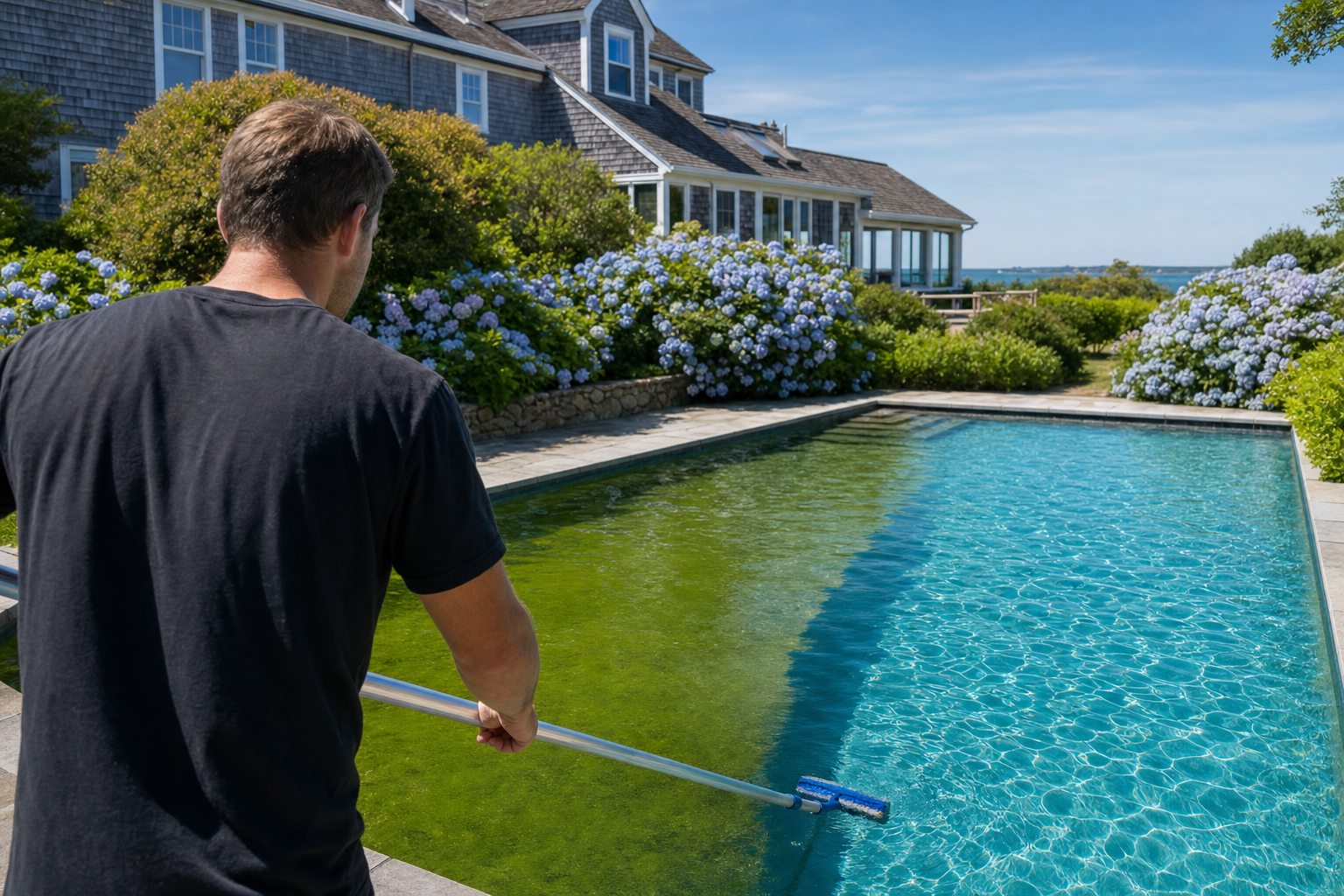
A green pool on Cape Cod is a common frustration for homeowners at the start of every swim season. After months of sitting under a winter cover, or after a period of neglect or chemical imbalance, your pool can transform from crystal blue to murky green in as little as 24–48 hours. At Cape Cod Pool Repair, we treat algae outbreaks throughout Barnstable, Hyannis, Yarmouth, Falmouth, Plymouth, and the wider South Shore—and we can turn your green pool clear in most cases within 3–5 days.
Quick Answer: Why Is Your Pool Green?
- Algae growth – the most common cause; triggered by low chlorine, high pH, or poor circulation
- Metal (copper or iron) staining – green tint without cloudiness; caused by dissolved metals oxidizing
- Pollen overload – yellow-green haze visible on surface; common in April–May on Cape Cod
Understanding Pool Algae: Types and Severity
Green Algae (Most Common)
Green algae (Chlorophyta) is the most widespread pool algae type and responsible for the vast majority of green pool calls we receive on Cape Cod and the South Shore. It grows freely in the water column and on surfaces, is slippery to the touch, and turns water opaque green. Green algae responds well to chlorine shock and algaecide treatment and can typically be cleared within 3–5 days with aggressive treatment.
Yellow/Mustard Algae
Mustard algae (a yellow-green variety) clings stubbornly to pool walls, floors, and shaded areas. It is chlorine-resistant at normal levels and frequently returns after treatment if not completely eradicated. Mustard algae requires higher shock doses, thorough brushing, and algaecide formulations specifically effective against its strain.
Black Algae
Black algae (actually a cyanobacterium) forms dark, deeply rooted colonies in cracks and rough surfaces. It has a protective outer layer that resists chlorine. Complete black algae elimination requires mechanical removal with a stainless steel brush, concentrated chlorine treatment directly to each spot, and often surface repair to eliminate the porous crevices where it anchors.
The Green Pool Treatment Process
Step 1: Test and Balance Water Chemistry
Before adding shock or algaecide, test pH and adjust to 7.2–7.4. This maximizes chlorine effectiveness during treatment. With pH above 7.8, even a massive shock dose may fail to clear the pool because the active chlorine concentration (hypochlorous acid) drops below effective levels.
Step 2: Brush All Pool Surfaces
Physical disruption of algae colonies is critical. Brush walls, floor, steps, and behind ladders before adding chemicals. This exposes the algae to sanitizer and prevents dead algae from re-rooting. Use a nylon brush on plaster surfaces and a stainless steel brush only on gunite.
Step 3: Shock the Pool
For moderate green pools, a triple-shock dose (3 lbs of calcium hypochlorite per 10,000 gallons) is the standard starting point. For severe green or black-water pools, we may dose at 5–10x the normal shock level. Apply shock after sunset to prevent UV degradation before it can work. Run the pump continuously throughout treatment.
Step 4: Add Algaecide
A quality copper-based or polymer algaecide applied after shocking provides a second line of attack and helps prevent regrowth. Follow label directions carefully—adding too much copper algaecide to pools with high pH can cause staining.
Step 5: Vacuum to Waste
Dead algae sinks to the bottom. Vacuuming to waste (bypassing the filter) removes it from the pool without clogging the filter with a massive organic load. Expect significant water loss during this step—plan to refill after vacuuming.
Step 6: Filter and Clarify
With dead algae cleared from the bottom, run the filter continuously and backwash or clean every 8–12 hours until clarity is restored. A flocculating clarifier can speed this process significantly by causing fine particles to clump and settle for vacuum removal.
Why Cape Cod Pools Turn Green in Spring
Pools that have been covered all winter often surprise homeowners with green water at opening. This happens because:
- Winter algaecide treatments degrade over the long off-season
- Partially decomposed organic matter (leaves, insects) under the cover produces nutrients that feed algae
- Chlorine added at closing has fully dissipated by April or May
- The sudden temperature rise of spring activates dormant algae spores within days
Our spring opening service includes a full chemical treatment and balance that prevents green water from developing as the pool warms up. See our blog post on Pool Opening Service Cape Cod: Spring Checklist for 2026 for the full protocol.
When to Call a Professional for Green Pool Treatment
DIY treatment is reasonable for mild-to-moderate green water. Call Cape Cod Pool Repair when:
- The pool is black or completely opaque and you cannot see the drain
- Three rounds of shocking have not improved clarity
- You suspect black algae or mustard algae based on color or location of growth
- Green water returns within days of clearing, indicating a systemic chemistry or circulation issue
- You see visible algae on pool surfaces that returns after brushing, suggesting plaster damage providing anchor points
AEO Quick Recap: Green Pool FAQs
- Is it safe to swim in a green pool? No. Green pool water indicates inadequate sanitation. Swimming in it risks skin, eye, and ear infections, and potentially exposure to harmful bacteria. The CDC healthy swimming guidelines recommend staying out of the water until chlorine and pH levels are verified safe.
- How long does green pool treatment take? Mild cases clear in 2–3 days. Severe cases may require 5–7 days of continuous treatment and filtration. Black algae can take 1–2 weeks of persistent treatment.
- Will shocking a green pool damage the plaster? Properly dosed calcium hypochlorite at the pH ranges used for algae treatment will not damage sound plaster. Existing plaster damage may become more visible after treatment removes algae that was obscuring it.
FAQ: Green Pool Treatment on Cape Cod
How much does professional green pool treatment cost on Cape Cod?
A professional green pool treatment service including chemicals, labor, vacuuming, and follow-up water test typically ranges from $250 to $600 depending on pool size and algae severity. Severe black-water or black algae treatments requiring multiple visits cost more. Request a free quote based on your specific pool.
Why does my Cape Cod pool keep turning green even with regular chlorination?
Recurring green water despite regular chlorination usually traces back to one of three root causes: (1) pH consistently above 7.8, which renders chlorine largely ineffective; (2) cyanuric acid above 80–100 ppm, which over-stabilizes chlorine and prevents it from sanitizing; or (3) inadequate circulation leaving dead zones where algae grows unmolested. A professional water balance assessment is the fastest path to finding and fixing the underlying cause.
What type of shock is best for a green pool?
Calcium hypochlorite (cal-hypo) granular shock is the gold standard for treating green pools due to its high available chlorine content (65–78%). Dichlor granules are a good alternative but add CYA with each dose. Liquid sodium hypochlorite (pool bleach) is effective for maintenance but requires larger volumes for shock treatment. Avoid non-chlorine shock (potassium monopersulfate) as a primary green pool treatment—it does not kill algae directly.
Can I use algaecide alone to clear a green pool?
No. Algaecide is a preventive and supplemental treatment, not a primary cure for an established outbreak. It works best when added after chlorine shock has killed the active bloom. Using algaecide alone will reduce regrowth but will not clear existing green water.
Does Cape Cod Pool Repair service Falmouth and Hyannis?
Yes. We provide green pool treatment and all pool maintenance services throughout Cape Cod and the South Shore, including Falmouth, Hyannis, Barnstable, Yarmouth, Plymouth, and surrounding towns. Visit our service areas page or contact us to schedule service.
Get Your Pool Clear for Summer
Don’t spend weeks fighting a green pool when professional treatment can have it clear in days. Cape Cod Pool Repair brings the right chemicals, equipment, and expertise to eliminate even the most stubborn algae outbreaks on the Cape and South Shore. Contact us today to schedule your green pool treatment appointment and get your summer back on track.
Preventing Green Pool Water: Best Practices for Cape Cod
Once you’ve cleared a green pool, the obvious goal is to keep it from turning green again. Prevention is far less expensive than treatment, and a consistent maintenance routine is the most reliable approach for Cape Cod homeowners contending with the unique environmental challenges of coastal Massachusetts.
Consistent Chlorine Management
The most important factor in algae prevention is maintaining an uninterrupted chlorine residual in the water. Chlorine should never drop below 1 ppm; algae blooms can establish within hours at 0 ppm. The challenge on Cape Cod is that chlorine demand is highly variable—a weekend of 20 swimmers followed by a hot, sunny week burns chlorine far faster than a quiet week of light use. Testing twice weekly (more during heavy use periods) and adding sanitizer accordingly, rather than on a fixed schedule, keeps chlorine levels in the safe zone.
Phosphate Control
Phosphates are the primary nutrient source that enables algae to grow rapidly in pool water. Phosphates enter pools from many sources: leaf debris, fertilizer runoff, some pool chemicals, and even municipal water supplies. High phosphate levels (above 200 ppb) make algae blooms more likely and more intense, and reduce the effectiveness of chlorine in preventing them. A phosphate remover applied monthly during the season maintains phosphates at a level where algae struggles to sustain a bloom even when chlorine momentarily dips.
Circulation and Coverage
Algae preferentially grows in areas of poor circulation—behind ladders, in steps, in corners, and in shaded sections of the pool. Adjusting return jet angles to create a circular circulation pattern that minimizes dead zones reduces these prime algae habitats. Running your pump for at least 8–10 hours per day during the swimming season ensures adequate water turnover—the entire pool volume should pass through the filter at least once every 8 hours.
Regular Brushing
Brushing pool walls and floor twice per week disrupts early-stage algae colonies before they can establish. Algae begins as a microscopic biofilm on surfaces before it becomes visible in the water. Breaking up this biofilm mechanically and sending it into suspension, where chlorine can neutralize it, is the most underused preventive strategy available to pool owners.
Seasonal Algaecide Program
A weekly maintenance algaecide—a preventive dose of a quality non-foaming algaecide—provides a chemical backstop when chlorine momentarily dips between testing cycles. This is especially valuable for Cape Cod vacation properties that may go 5–7 days between owner visits. Combined with a reliable automatic chlorinator or salt system, a weekly algaecide treatment provides redundant protection against the green water that can develop alarmingly fast during the warm August weeks when algae growth rates peak.
For properties in Falmouth, Yarmouth, or Plymouth where seasonal rentals mean the pool may be under heavy use without consistent professional oversight, Cape Cod Pool Repair offers weekly maintenance programs that include water testing, chemical adjustment, brushing, and equipment inspection. Contact us to discuss a recurring maintenance plan, or explore all of our pool services for Cape Cod and the South Shore.