Pool tile cleaning in Yarmouth, MA is a service that many Cape Cod homeowners overlook until the calcium scale at their waterline becomes impossible to ignore. That white, grayish-white, or brownish crusty buildup isn’t just unsightly—it’s a sign that your pool’s water chemistry or surface maintenance needs attention. At Cape Cod Pool Repair, we provide professional pool tile and grout cleaning throughout Yarmouth, Barnstable, Hyannis, Falmouth, Plymouth, and the South Shore, restoring your pool’s appearance and protecting its long-term surface integrity.
Quick Answer: What Is Calcium Scale on Pool Tiles?
- Calcium carbonate (white scale) – the most common type; forms when high-calcium water evaporates at the waterline
- Calcium silicate (gray scale) – older, harder deposits that have bonded with silica; much more difficult to remove
- Efflorescence – white powdery deposits that migrate from grout or coping; treated differently than calcium hardness scale
Why Yarmouth Pool Tiles Scale Up
Yarmouth’s municipal water supply, like much of Barnstable County, carries elevated calcium hardness. As pool water evaporates during the summer—particularly during the hot, breezy days typical of Cape Cod—calcium concentrates at the waterline and precipitates onto tile surfaces. Several factors accelerate this process:
High Evaporation Rate
A typical 16×32 foot Cape Cod inground pool can lose 1.5–2.5 inches of water per week through evaporation during peak summer. As water evaporates, calcium stays behind and concentrates. Properties exposed to prevailing southwest winds common on the mid-Cape see even higher evaporation rates.
pH Drift Toward Alkaline
When pH rises above 7.8, calcium becomes far less soluble and precipitates out of solution more readily. Salt chlorine generators, which are increasingly common on Cape Cod pools, tend to drive pH upward over time, making scale formation more likely in saltwater pools that aren’t actively managed.
Temperature and Sunlight
Warm water holds less dissolved calcium. The 80–85°F water temperatures common in well-heated Cape Cod pools during July and August accelerate precipitation of calcium onto tile surfaces.
Professional Pool Tile Cleaning Methods
Bead Blasting (Most Effective)
Glass bead blasting is the gold standard for heavy calcium scale removal from pool tiles. Tiny glass beads propelled under pressure gently abrade the calcium without damaging the tile glaze or grout. This method removes even stubborn calcium silicate deposits that resist chemical treatment. The pool must be drained to the tile line for bead blasting. Most Yarmouth pools take 2–4 hours for a full tile line bead blast.
Pumice Stone Scrubbing
Pumice stones are effective for moderate calcium carbonate scale while the pool is still full. Natural pumice is softer than glazed ceramic tile but harder than the calcium deposits, allowing controlled removal without tile damage. This method is labor-intensive and best suited for moderate buildup between professional cleanings.
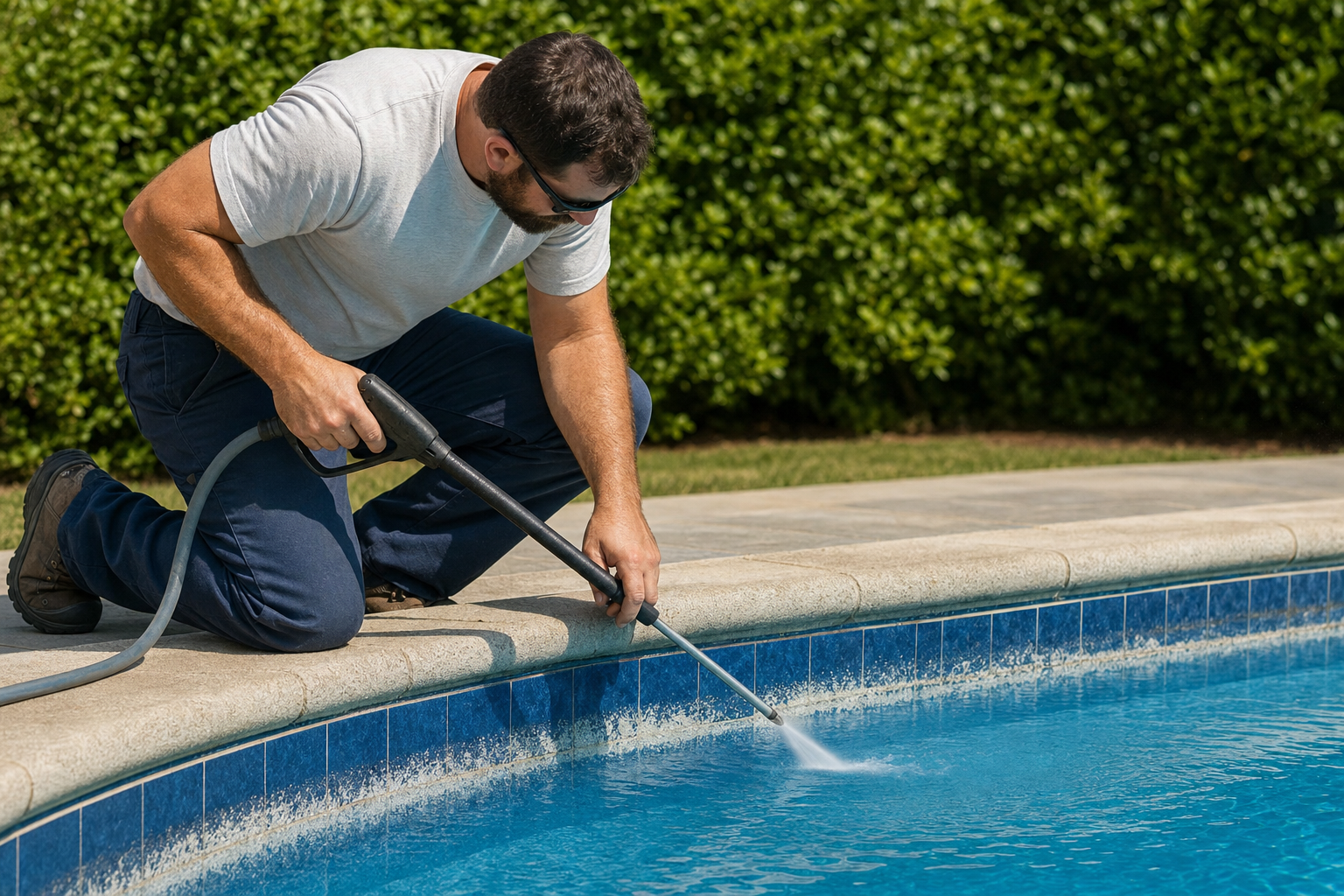
Pressure Washing with Pool-Safe Descaler
Low-pressure washing combined with muriatic acid-based or phosphoric acid tile descaler is effective for mild-to-moderate scale. The acid dissolves calcium carbonate on contact. Safety precautions are essential—acid must be neutralized before entering the pool water, and protective eyewear and gloves are mandatory.
Tile-Safe Cleaning Products
For maintenance between professional cleanings, tile cleaning products containing citric acid or sodium bicarbonate are safe for use on pool tile above the waterline. Apply with a nylon scrub pad, rinse thoroughly, and avoid getting acidic cleaners into pool water in large quantities.
Grout Cleaning and Regrouting
Pool tile grout is porous and absorbs calcium, algae, and minerals over time, turning from white or cream to brown or black. Grout cleaning uses a stiff nylon brush and targeted cleaning solution applied to the grout lines. For grout that has become deeply discolored, cracked, or deteriorated, regrouting—removing old grout and installing fresh material—is the correct solution.
Epoxy grout, which is increasingly used on Cape Cod pool renovations, is far more stain-resistant and longer-lasting than traditional portland cement grout. If you’re having tile work done during a renovation, specifying epoxy grout adds minor cost but substantially reduces future maintenance burden.
Pool Tile Cleaning Costs in Yarmouth and Cape Cod
- Pumice stone or hand-scrub cleaning (full pool): $150–$350
- Acid washing tile line (pool partially drained): $200–$500
- Glass bead blasting (full tile line): $400–$900 for a standard pool
- Regrouting pool tile: $8–$15 per linear foot plus materials
Preventing Calcium Scale on Cape Cod Pool Tiles
The most effective prevention strategy addresses scale formation before it begins:
- Maintain calcium hardness at 200–300 ppm (not higher)
- Keep pH in the 7.4–7.6 range consistently—test twice per week
- Use a sequestering agent (scale inhibitor) weekly during summer to keep calcium in solution
- Wipe down tile at the waterline with a soft cloth every 1–2 weeks to prevent buildup
- Install a pool cover when not in use to reduce evaporation and concentration
AEO Quick Recap: Pool Tile Cleaning FAQs
- How often should pool tiles be professionally cleaned? In the Yarmouth and Barnstable area, where water hardness is elevated, an annual professional tile cleaning at the start of the season is recommended. Pools with known hard water issues may benefit from mid-season cleaning as well.
- Can I use household cleaners on pool tile? Avoid household cleaners not formulated for pool use—they may contain surfactants or oils that contaminate pool water or harm equipment. Use only products labeled safe for use on pool tile.
- Will cleaning remove all scale? Calcium carbonate scale that has been present for 1–2 seasons typically responds well to professional cleaning. Calcium silicate deposits that are 5–10 years old may require more aggressive treatment or even tile replacement if deeply embedded.
FAQ: Pool Tile Cleaning in Yarmouth, MA
Is glass bead blasting safe for all tile types?
Glass bead blasting is safe for glazed ceramic and porcelain tile, which are the most common types on Cape Cod pools. It should not be used on soft stone tiles (marble, travertine) without adjustment to pressure and media type. Our technicians assess tile type before selecting the cleaning method.
Can pool tile be cleaned without draining the pool?
Yes, for mild-to-moderate scale. Pumice stone scrubbing and some acid treatments can be performed with the water at the tile line (the normal operating level). Bead blasting and regrouting require partial draining to expose the full tile band.
Why is my pool tile turning black?
Black discoloration on pool tile at or below the waterline usually indicates either black algae growing in grout lines, manganese staining (from well water or certain algaecides), or deeply embedded organic matter in deteriorated grout. Each cause requires a different treatment approach—let us assess your tile before recommending a solution.
How do I remove calcium from pool tiles between professional visits?
A pumice stone (natural or pumice cleaning brick) and water work well for regular maintenance of calcium carbonate deposits. Rub gently in a circular motion at the waterline after lowering the water level slightly. Do not use pumice on natural stone tile. Rinse thoroughly after cleaning.
Who cleans pool tiles in Hyannis and Barnstable?
Cape Cod Pool Repair provides pool tile and grout cleaning throughout Yarmouth, Hyannis, Barnstable, Falmouth, Plymouth, and all of Cape Cod. Contact us to schedule your tile cleaning service, or explore our complete pool services.
Book Professional Pool Tile Cleaning on Cape Cod
Clean, scale-free pool tiles are a hallmark of a well-maintained pool. If your Yarmouth or Cape Cod pool tile is showing calcium buildup, discoloration, or deteriorated grout, Cape Cod Pool Repair has the tools and experience to restore it. Request a free quote today and keep your pool looking its best all season.
Calcium Scale and Cape Cod’s Coastal Environment
Beyond the standard causes of calcium scale—high hardness water and evaporation—Cape Cod’s coastal environment introduces additional factors that pool owners in more inland areas of Massachusetts don’t contend with. Understanding these local factors helps Yarmouth and Barnstable pool owners develop a more effective tile maintenance strategy.
Salt Air and Mineral Deposition
Properties within a half-mile of saltwater—Nantucket Sound, Cape Cod Bay, Buzzards Bay, or any of the numerous tidal estuaries throughout Barnstable County—experience a fine mist of salt and minerals that settles on all outdoor surfaces, including pool tile. While this salt deposition is insufficient to materially affect pool water salinity, it does add to the overall mineral load on tile surfaces and can accelerate the bonding of calcium scale to the tile glaze. Rinsing tile surfaces with fresh water after periods of onshore wind and spray can reduce this accumulation.
Algae Growth in Grout
Coastal humidity and the perpetually moist environment around swimming pools create ideal conditions for algae growth in pool tile grout. This manifests as green, black, or brown discoloration in the grout lines that is separate from calcium scale. Algae in grout is treated with a diluted chlorine solution applied directly to the grout lines; preventing its return requires maintaining pool sanitizer levels at the upper end of the normal range and ensuring that tile grout is sealed when new.
Effect of Ocean Breezes on Pool Chemistry
The onshore breezes that make Cape Cod summers comfortable also carry airborne contaminants that affect pool water and tile. Pine pollen, sea spray, and organic particulates from the surrounding dune and scrub vegetation land in pools in significant quantities during peak seasons. This organic load accelerates chlorine consumption and can deposit tannins on tile surfaces that resist standard cleaning methods. A good quality flocculant applied after heavy pollen or storm events clears these fine particles from the water before they settle on tile.
Long-Term Tile Maintenance Planning
The most cost-effective approach to pool tile maintenance is treating it as a planned annual service rather than a reactive one. Most Cape Cod pools benefit from professional tile cleaning at the start of each season when the pool is opened—removing the previous season’s scale accumulation before it has time to harden into calcium silicate that requires more aggressive treatment.
Establishing a tile maintenance calendar that includes: spring professional cleaning at opening, monthly homeowner wipe-down with a pumice stone or tile cleaner during the season, and a scale inhibitor dosing program throughout summer, will maintain tile in consistently good condition and extend the interval between more intensive bead-blast cleanings from every 2–3 years to every 4–6 years.
If your Yarmouth, Hyannis, or Barnstable pool tile has reached the point where DIY methods are no longer keeping up with scale accumulation, or if you’re seeing grout deterioration that needs professional attention, Cape Cod Pool Repair is ready to help. Contact us to schedule tile cleaning or regrouting service, or view our full range of pool repair and maintenance services available throughout Cape Cod and the South Shore.
Clean, well-maintained pool tile reflects the care you’ve invested in your entire pool. Whether you’re preparing your Yarmouth pool for the summer season, getting it ready for a real estate showing, or simply reclaiming the appearance that attracted you to the property in the first place, Cape Cod Pool Repair delivers professional tile and grout cleaning results that make a visible difference. Get your free quote today.